Achillea millefolium (Yarrow) was the first familiar medicinal plant to proudly show itself to me on the 1st day of a recent six day campervan trip from Christchurch to the west coast of Te Waipounamu (the South Island), of Aotearoa New Zealand. Growing and flowering prolifically along the roadside and beyond as we ventured inland towards Arthurs Pass, I wished I could have stayed another night in the campsite, and had the chance to harvest a decent batch.
Yarrow is a great plant to have nearby. So also apparently thought the Greek warrior Achilles, who is said to have applied its leaves and flowers topically to the sword and arrow wounds of his soldiers after battle, to close and heal their wounds. It is widely utilized in the traditional medicine of cultures from Europe to Asia to north America for numerous health conditions. They include spasmodic digestive and gynaecological complaints, and as a febrifuge and antimicrobial for fevers and infections(1). Relief from period pain was reported after drinking three cups of yarrow tea daily on days one to three of the menstrual cycle, in a clinical trial with 91 students aged 19-23(2).
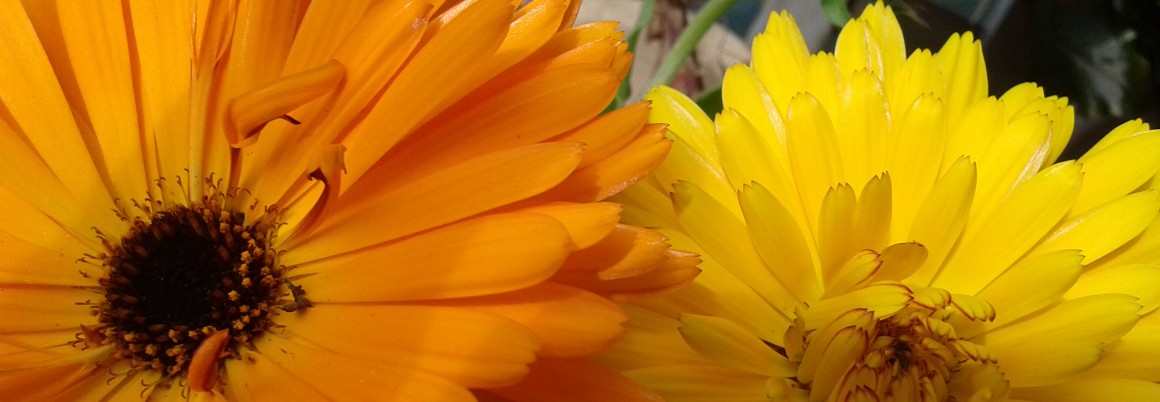
Eschscholztia californica was a pretty poppy that called out with its bright yellow and orange flowers, in many roadside and dry gravelly patches throughout our journey. Related botanically to its opium-producing cousin, also seen in a couple of places thanks to the early Chinese goldminers of central Otago, Californian poppy is now a popular remedy for anxiety, insomnia and mild pain. My application of it however, has mainly been in patients withdrawing from substance dependency(3).
The amount of St John’s Wort (Hypericum perforatum) thriving in numerous locations in the Hawea, Wanaka and Queenstown districts and in other areas throughout our journey, was quite eye opening. I first wildcrafted and grew Hypericum as a student in the UK, and have dispensed it extensively within herbal formulations over the past 30 years. A powerful antidepressant, antimicrobial and anti-inflammatory, with a multitude of applications both topically and internally.
Mullein (Verbascum thapsus) was another one, appearing unexpectantly upon rounding many corners on sloping, dry hillbanks, with its distinctive upright stems poking towards the sky. As an invasive plant in many pastures and fields of rural New Zealand, with a rich content of polysaccharide hydrocolloids and other expectorant and anti-inflammatory phytochemicals, its long historical use as a lung tonic and for the management of upper respiratory tract infections, warrants more attention. While it’s a lot of work to harvest and dry the large lightweight leaves, it makes a great cough formula ingredient. The flowers and roots, also have established medicinal properties(4).
And then the rosehips. Through Lindis Pass into the upper Waitaki Valley as well as at the start of Arthurs Pass, fields and fields of them, dominated many parts of the landscape. Rosehips (Rosa canina) are probably best known for their vitamin C content, and in the 1940’s, locals from Otago and Southland wildcrafted the hips and sold them to the Greggs factory in Dunedin to manufacture syrups and powder forms. Rosehips were similarly wildcrafted in Britain during World War Two, and its syrup given to children and troops to prevent scurvy.
Several clinical trials have reported efficacy of rosehip powder or extracts for the symptomatic treatment of osteoarthritis(5-7). Inhibitory effects against both cyclo-oxygenase 1 and 2 (COX-1 and COX-2) enzymes may contribute to these benefits(8, 9 ). Other traditional indications are for kidney stones, UTI’s and digestive ailments, and its oil is a popular application for skin health. Rosehips have antioxidant, anti-inflammatory, anti-obesity, anti-cancer, hepatoprotective, nephroprotective, cardioprotective, anti-aging, anti H. pylori, neuroprotective and antinociceptive activities(10).
Finally, heading back into Canterbury, the presence of Elder trees (Sambucus nigra), made themselves known upon the landscape. I made many batches of wine using Elder berries or flowers I wildcrafted when living in the U.K. many years ago, although it is a less common albeit somewhat invasive species here and prefers the cooler south rather than north island.
Elder flowers are a great decongestant, and its berries rich in antioxidant anthocyanins and other anti-inflammatory polyphenols and vitamin C (11). Global demand greatly outstripped supply during the Covid-19 pandemic, due to its alleged antiviral properties (12, 13).
Many other established or invasive medicinal plants were seen during our journey, though most of these didn’t cry out so much to me. It was the ones that I don’t see as much in the north island where I live, that served to remind me of the enormous geographical and botanical diversity that is characteristic of the Aotearoa New Zealand landscape.
And of course the extent and variety of our own native species was absolutely awe-inspiring, as it has been every time I’ve travelled on the west coast. The dominance of rātā (Metrosideros robusta) with its beautiful red flowers blanketing out in so many locations from within the dominant native beech forests (Nothofagus spp), was truly stunning.
We live in a country where there are bountiful supplies of medicinal plants. From many perspectives including those based upon invasive plant and land management, biodiversity, sustainability, economics and ultimately health outcomes, we should use more of them.
References:
- Ali SI, Gopalakrishnan B, Venkatesalu V. Pharmacognosy, Phytochemistry and Pharmacological Properties of Achillea millefolium L.: A Review. Phytother Res. 2017 Aug;31(8):1140-116
- Jenabi E, Fereidoony B. Effect of Achillea Millefolium on Relief of Primary Dysmenorrhea: A Double-Blind Randomized Clinical Trial. J Pediatr Adolesc Gynecol. 2015 Oct;28(5):402-4.
- Rasmussen PL, A Role for Phytotherapy in the Treatment of Benzodiazepine and Opiate Drug Withdrawal; Part 2, Treatment Approaches to Opiate Withdrawal, and Conclusions. Eur J Herbal Med, 1997; 13-10.
- Gupta A, Atkinson AN, Pandey AK, Bishayee A. Health-promoting and disease-mitigating potential of Verbascum thapsus L. (common mullein): A review. Phytother Res. 2022 Apr;36(4):1507-1522.
- Rasmussen PL, Rosehip for Osteoarthritis. Phytonews 24, February 2006; published by Phytomed Medicinal Herbs Ltd, Auckland, New Zealand. ISSN 1175-0251.
- Christensen R, Bartels EM, Altman RD, Astrup A, Bliddal H. Does the hip powder of Rosa canina (rosehip) reduce pain in osteoarthritis patients?–a meta-analysis of randomized controlled trials. Osteoarthritis Cartilage. 2008 Sep;16(9):965-72.
- Gruenwald J, Uebelhack R, Moré MI. Rosa canina – Rose hip pharmacological ingredients and molecular mechanics counteracting osteoarthritis – A systematic review. Phytomedicine. 2019 Jul;60:152958.
- Jäger AK, Eldeen IM, van Staden J. COX-1 and -2 activity of rose hip. Phytother Res. 2007 Dec;21(12):1251-2.
- Rasmussen PL, Rosehip acts as a cyclo-oxygenase inhibitor. Phytonews 29, June 2008; published by Phytomed Medicinal Herbs Ltd, Auckland, New Zealand. ISSN 1175-0251.
- Ayati Z, Amiri MS, Ramezani M, Delshad E, Sahebkar A, Emami SA. Phytochemistry, Traditional Uses and Pharmacological Profile of Rose Hip: A Review. Curr Pharm Des. 2018;24(35):4101-4124.
- Stępień AE, Trojniak J, Tabarkiewicz J. Health-Promoting Properties: Anti-Inflammatory and Anticancer Properties of Sambucus nigra L. Flowers and Fruits. Molecules. 2023 Aug 24;28(17):6235.
- Wieland LS, Piechotta V, Feinberg T, Ludeman E, Hutton B, Kanji S, Seely D, Garritty C. Elderberry for prevention and treatment of viral respiratory illnesses: a systematic review. BMC Complement Med Ther. 2021 Apr 7;21(1):112.
- Boroduske A, Jekabsons K, Riekstina U, Muceniece R, Rostoks N, Nakurte I. Wild Sambucus nigra L. from north-east edge of the species range: A valuable germplasm with inhibitory capacity against SARS-CoV2 S-protein RBD and hACE2 binding in vitro. Ind Crops Prod. 2021 Jul;165:113438.

Another great informative Herbblurb article. And a travel guide too. Thanks Phil