
by Phil Rasmussen
Aotearoa New Zealand has in the past two weeks detected its first cases of bird flu, a highly contagious strain of the H5N1 influenza A virus, that can spread rapidly in birds(1). This came less than a month after the first case of H5N1 bird flu was detected in Australia.
Waterfowl such as ducks, geese and swans and shorebirds are the natural reservoir of all known influenza A viruses. First detected in poultry in China in 1996, the H5N1 avian influenza virus has evolved into a significant global public health hazard, primarily owing to its high pathogenicity and potential for interspecies transmission. Extensive genetic diversification has occurred since 2005, including the formation of hundreds of genotypes following reassortment with other avian influenza A viruses. Highly pathogenic H5N1 avian influenza (HPAI) A virus has spread widely through many regions of the world, causing infections of numerous terrestrial, seabird, shorebird, and migratory wild bird species(2). Since 1997, multiple outbreaks of avian influenza in domestic poultry have occurred, and the current 2.3.3.4.4b clade of H5N1 which emerged in 2020, has now become widespread(3, 4).
Migratory birds are the most likely pathway for the virus to come here, as Aotearoa is a seasonal home to several species who migrate from and travel between here and far away places including the Antarctic, other islands in the Pacific, Australia, China, Alaska, Siberia, and northern Asia. The first case was a wild brown skua found on Petone Beach in Lower Hutt.
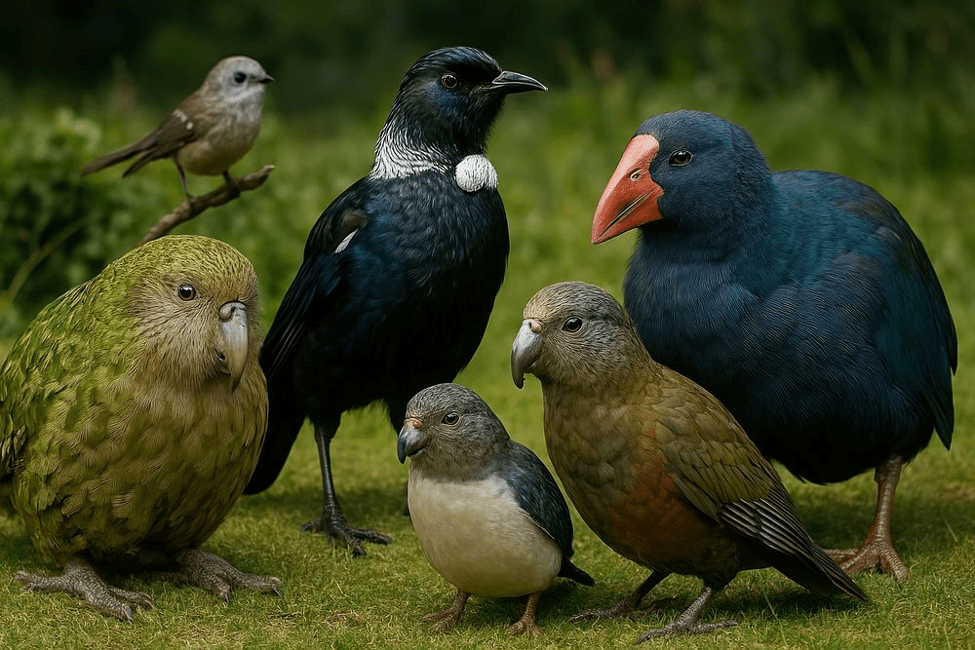
Efforts to protect some of our already threatened native bird species such as kākāpō, takahē, tūturuatu (shore plover), kakī (black stilt) and kākāriki karaka (orange-fronted parakeet) by vaccination and isolation are underway. The second bird confirmed to have bird flu here was a native kāhu or swamp harrier hawk, which doesn’t bode well given many of these species are already vulnerable. While vaccination may help save some, it has obvious limitations and only gives around 6 months of protection, therefore additional control measures are urgently needed.
Other biosecurity measures are now being implemented by the Ministry of Primary Industries, Department of Conservation and poultry farmers(5, 6). This includes PSE protection measures, moving chickens indoors, and lockdowns. As has occurred overseas, it seems likely that New Zealand poultry farms will at some stage become affected by this virus, potentially leading to the deaths of many millions of birds.
Potential transmission to dairy cows
Highly pathogenic H5N1 influenza was first detected in dairy cows in Texas in March 2024. The virus then disseminated rapidly, causing widespread outbreaks in dairy cattle across the United States(7, 8, 9, 10). Over 1000 herds in at least 19 states have been affected to date(11, 12).
Most cattle recovered in two to three weeks with supportive care, but the impact of the virus on dairy cattle varied from nonclinical to severe clinical signs and death. Up to 20% of each herd in the U.S. outbreaks developed clinical disease with symptoms such as reduced milk production, thicker colostrum-like milk, reduced appetite, lethargy, fever and dehydration. This lead to substantial economic losses(9, 12).
At first, many American dairy producers did not report clinical signs in their cows or test for the virus. Cats and peridomestic birds on many affected farms died from viral exposure. A number of dairy workers showed signs of conjunctivitis, which was confirmed to be due to H5N1(12).
This represents a significant expansion in the mammalian host range of highly pathogenic H5N1. Genomic analysis and epidemiological investigation suggests a reassortment event in wild bird populations preceded a single wild bird-to-cattle transmission episode. The movement of asymptomatic or presymptomatic cattle also likely played a role in the spread of HPAI within the United States dairy sector(7).
While infectious virus is detected in milk following mammary infection, unpasteurised milk ingestion by calves doesn’t seem to cause overt disease(13). However, the risk to humans from drinking raw (unpasteurised) milk from infected cows remains unknown, and virologists in the US have advised against this. American authorities have confirmed that pasteurization inactivated the virus in dairy products and showed that it was very rarely detected in beef from affected cows.
Two years later, the U.S. outbreak of the H5N1 influenza virus in cattle appears to be waning, easing fears that it could cause long-lasting damage to the dairy industry or mutate into a human pandemic form. However, it remains a problem in some states, and efforts to eliminate it entirely face formidable challenges. The mechanisms of transmission within and between dairy herds also remains a critical question that has yet to be fully answered(13, 14). American virologists have advocated strongly for precautions to be taken by dairy or poultry farm workers, and that those with backyard birds, chickens or pigeons, should also be careful. Keeping dogs and cats away from dead birds, is also recommended(15).
The persistence of the H5N1 virus in U.S. dairy cattle and the fact it has adapted to infect another key mammalian species, coupled with its broad and unprecedented host range, are alarming developments. It also presents a public health threat due to the establishment of distinct transmission chains linking wild birds, cattle, the environment, and humans.
This is highly relevant to our situation here in Aotearoa New Zealand, given that the dairy industry is our largest export earner, and is based largely on outdoor grazing. While the U.S. outbreak has to date been confined to that country, the risk of transmission of bird flu from wild or migratory birds to cattle as occurred in the U.S., appears very real. If highly pathogenic H5N1 become established in dairy cows here, it could have serious biosecurity, public health and economic consequences. Measures to increase surveillance, develop animal vaccines and treatment agents, enhance farm biosecurity, and continue to ensure dairy product safety, should be considered. Incorporation of a medicinal plant programme, could also make a valuable contribution as part of these measures.
Risk to Humans
While primarily affecting avian species, H5N1 has repeatedly breached species barriers, infecting mammals including seals, dolphins, seals, foxes, otters and cattle(16). As with the SARS-1 and SARS-2 (Covid-19) viruses, which originated from viruses in birds and bats, H5N1 also has the potential to infect humans.
The first known human infection with a highly pathogenic H5N1 influenza A virus appeared in China in 1997. Between 2003 and 2017, the WHO documented an additional 862 human cases, mainly from southeast Asia and Egypt, with a mean annual case fatality rate of 56%(17).
Human cases fell after 2016, but H5N1 clade 2.3.4.4b viruses then appeared in Europe and spread rapidly to the Americas. Human infections of this genotype have been relatively rare to date, and until the US dairy outbreak, mostly occurred in those with unprotected exposure to sick birds. Many instances of poultry workers being infected have been reported(18).
Since the start of the USA dairy outbreak, the H5N1 virus spread from dairy cattle to cats, mice, peridomestic birds, species such as skunks and raccoons, as well as humans. Between March 2024 and May 2025, 70 human cases of highly pathogenic H5N1 were reported in the United States, although it is likely that the true number of cases was considerably more(12). Of these 41 were exposed to dairy cows, 24 to commercial poultry, two to backyard poultry and three had an unidentified source of exposure. All sequenced viruses were clade 2.3.4.4b. Overall, 62 cases (89%) reported eye redness, 32 (46%) fever and 29 (41%) respiratory symptoms; 54 of 67 cases (81%) reported receiving antiviral treatment. Most illnesses were mild; however, four patients were hospitalized. Of the hospitalized patients, three had pneumonia and one died(19).
While evolution of the virus to a strain capable of rapid human-to-human transmission hasn’t occurred as yet, history and science tell us that such a worrying development remains possible.
The 1918-1920 so-called Spanish flu (which actually began in the U.S.), was caused by a highly lethal strain of the H1N1 subtype of the influenza A virus, which likely originated in birds, before adapting in humans. This was an RNA virus that spread incredibly fast worldwide, ultimately infecting an estimated one-third of the global population and causing the deaths of an estimated 20 to 30 million people(20, 21). Despite our understanding of viral transmission and public health measures now being better than they were in 1918, the potential for an epidemic or pandemic is a concern.
Several outbreaks of bird flu have occurred since 2005, when H5N1 in birds was described as “public health enemy number 1”, and likely to lead to a global pandemic. At that time, highly pathogenic H5N1 influenza A viruses were spreading relentlessly across the globe, causing widespread death in poultry, substantial economic loss to farmers, and infections reported in more than 300 people with a very high mortality rate of 60%(22). As it happened, Covid-19 pipped it at the post, but that didn’t mean that the risk of a future H5N1 pandemic went away.
Detection of the D1.1 genotype primarily circulating in wild birds, was reported in dairy cows in early 2025. Unlike the B3.13 virus circulating in cattle, this has been associated with severe disease in humans, and resulted in two deaths(17, 23). The co-circulation of B3.13 and D1.1 viruses in dairy cows increases the risk of reassortment and viral evolution to a more virulent strain. Genotype D1.1 has now also been detected in domestic cats.
However humans have some residual or existing immunity to H5N1 through our long term exposure to other influenza viruses such as H1N1(24). Studies in ferrets and using human organoids suggest that currently available seasonal influenza vaccines may confer some degree of protection against H5N1. To what extent however, is as yet unknown(24, 25).
It is hard to know how close we are to the H5N1 virus evolving to become much more virulent in humans. However, reassortment in particular, when co-infection with two viruses occurs (such as a dairy farm worker already with influenza, picking up H5N1), presents a possible mechanism of increased virulence developing.
Some useful phytomedicines
Medicinal plants, having being the mainstay of how humans and animals have treated themselves when unwell throughout virtually all of history, deserve much more attention for their potential value in dealing with H5N1.
In 2005, with a previous version of H5N1 circulating in many bird species around the globe and fears mounting of this triggering a human pandemic, I researched the history of infectious viral diseases and what was known about the H5N1 strains at the time(26, 27).
Below is a reproduction of part of an article I wrote on Avian Influenza in November 2005, for a practitioner publication produced by a company I founded and was then managing. While an update is now called for, much of the information provided is still highly relevant to the current H5N1 situation here in Aotearoa New Zealand.
Avian Influenza Update; excerpts from an article by Phil Rasmussen & edited by Noeline Jonkers, in Phytonews 23, published by Phytomed Medicinal Herbs Ltd, November 2005:
Echinacea:
Echinacea has been shown in animal studies to impart protection against mortality from various viruses(28,29), and several clinical trials have shown beneficial effects of Echinacea during the treatment of colds and influenza(30-34).
Increased numbers of circulating white blood cells, monocytes, neutrophils and natural killer (NK) cells, and the phagocytotic abilities of these, are the principle immunological changes associated with Echinacea root usage. These effects are all a reflection of enhancement of the non-specific immune response, whereby the body’s ability to maintain immunosurveillance against a variety of potential viral or bacterial pathogens or spontaneous-developing tumours, is increased. This aspect of the immune response is quite different to that of the specific immune system as provoked by vaccination, whereby production of specific disease-related antibodies and a subsequent immune response occurs.
Certain of the above effects of Echinacea may at first seem counterproductive during the acute stage of an established H5N1 infection, in which much of the immune system could well be over-activated as described earlier. While activation of innate immune mechanisms such as NK cell activity is useful in the early immune response to most types of influenza(35,36), excessive enhancement of NK cell activity during the acute stage of a H5N1 infection, could perhaps be associated with a theoretical worsening of lung function(37).
At this point however, it is perhaps important to recognise that Echinacea root exhibits pharmacological actions better summarised as being immunomodulatory and anti-inflammatory rather than simply immunostimulant. Its use by experienced practitioners for autoimmune conditions such as asthma and eczema, is also due to its perceived actions as a modulator or regulator of a poorly functioning overall immune system. Additionally, while activation of several inflammatory as well as anti-inflammatory cytokines has been shown for Echinacea both in vitro and in vivo, the specific actions and potencies in this regard vary depending on the type of Echinacea product concerned.
Anti-inflammatory effects of Echinacea root are well established from both its traditional use to treat snake bites and major abscesses, as well as modern pharmacological studies(38-41). Recent studies have also shown that Echinacea alkamides produce a dual modulatory rather than simple stimulant effect on TNF-a expression in humans(42). These and other effects of Echinacea on gene expressions indicate a broad spectrum anti-inflammatory and immunomodulatory response(43), including reduced expression of IL-1β, IL-8 and TNF-α. Such effects could be helpful during the acute stages of H5N1 infection.
While speculative, modulation of TNF-a and other cytokine expression by Echinacea could therefore be useful in a situation of H5N1 infection during which TNF-α and cytokine production in general, is dysregulated. In addition to these anti-inflammatory and immunomodulatory effects, antioxidant actions by Echinacea could also be helpful during this situation(44).
However, while adequate doses of a good quality Echinacea preparation have been shown to enhance the capability of the body’s immune system to combat existing upper respiratory tract infections, whether such effects would occur to help hasten elimination of a virulent H5N1 infection, remain unknown.
The question also arises as to whether Echinacea is best used as a possible preventative agent to optimise immune defences ready for when an avian influenza pandemic occurs, rather than a treatment when an individual infection has occurred. Optimising immunosurveillance and activity of the non-specific immune system against such a virulent pathogen, while less likely to ensure complete protection than appropriate vaccination, may prevent such a virulent and life-threatening response to its presence.
Other phytomedicines:
Shikimic acid is a phenolic acid compound used as a key starting material in the manufacture of oseltamivir, and found in many plants including Chinese Star Anise (Illicium verum)(45). While this and other shikimic acid rich plants have been increasingly sought after since fears of a pandemic escalated, little evidence exists that shikimic acid itself or plants containing it, could be useful.
American ginseng (Panax quinqefolium) root has a protective effect against winter influenza in institutionalised older adults (see Phytonews 20(46)). More recently, a preventative effect against winter colds has been reported following daily use for 4 months, in a Canadian study involving 323 subjects aged 18-65 years of age(47). A higher immune response from influenza vaccination, has also been produced by concurrent administration of the closely related Panax ginseng(48).
The popular Chinese herb Astragalus membranaceous, traditionally used to help manage viral infections such as the common cold, has also shown some evidence of immune stimulation and antiviral effects(49-51).
Elderflower (Sambucus nigra) is generally used for its diaphoretic and decongestant properties, particularly during hay fever as well as catarrh and fever associated with the common cold or influenza. A clinical trial has found elderberry to have in vitro antiviral effects and reduce the duration and severity of influenza symptoms(52), and possible immunostimulant properties have been reported(53).
The root of Ginger (Zingiber officinale) has immunomodulatory(53) and antiviral properties(55-57), which along with its anti-inflammatory actions, may be useful. The fungus Reishi (Ganoderma lucidum), has established immunomodulatory effects and enhances innate immunity by activating NF-kappaB(58).
Olive leaf (Olea europaea) has become popular over recent years as an alleged treatment for winter influenza, although little published research has appeared until recently(59).
Propolis, the resinous material manufactured by bees from plants and rich in flavonoids, shows in vitro activity against various viruses(60,61), and has proven immunomodulatory and anti-inflammatory effects including down-regulation of inflammatory cytokine production(62,63).
Various plants contain compounds which act as neuraminidase inhibitors in vitro in the same manner as oseltamivir. The best studied of these is 5,7,4”-trihydroxy-8-methoxyflavone(64,65), a flavone closely related to baicalin and baicalein and found in roots of the popular Chinese herb Baical Skullcap (Scutellaria baicalensis), as well as aerial parts of the well-known European Skullcap (Scutellaria lateriflora).
A study just reported using a Chinese formula containing a large amount of baicalin in a pre-clinical animal model of endotoxin-induced lung injury, found a marked reduction in elevated plasma levels and the expressions of several inflammatory cytokines, in lung tissues. The formulation itself (San-Huang-Xie-Xin-Tang), as well as baicalin alone, also reduced plasma concentrations of IL-1b, TNF-α, and expressions of other cytokines associated with lung injury and lethality(66).
This study as well as another finding in vitro antiviral activity against SARS coronavirus for baicalin(66), provides strong support for a potential role for baicalin-containing phytomedicines in the treatment of acute H5N1 infection. The well-established anti-inflammatory, antioxidant and antimicrobial activities of Baical Skullcap(68), would seem to make further research on this phytomedicine in particular, highly justified.
Other neuraminidase inhibitors include resveratrol (found in red grapes) and emodin derivatives, anthraquinone compounds found in Aloe vera and a number of other laxative phytomedicines(69). The strong laxative effects of these would probably be major limitations to their clinical usefulness at this stage. As for all such compounds, considerations of bioavailability and dosage of each of these herbal medicines that would be required for significant activities need to be made.
With excessive inflammation in the lungs being increasingly related to the virulence of H5N1, treatment of infected patients with anti-inflammatory drugs or herbal medicines may in some cases be useful. However while the use of corticosteroids together with antiviral medication has been reported to confer clinical benefits in some cases of SARS(70), clinical trials are lacking and such steroid therapy has been linked with residual lung damage following treatment. There nevertheless remains a theoretical potential role for anti-inflammatory phytomedicines or phytochemicals such as curcumin, a key constituent of the cheap spice Turmeric, which is a significant inhibitor of TNF and could help reduce the adverse effects of excessive cytokine release.
While in all cases it is at this stage conjectural as to whether these or other various natural treatments would be helpful during an H5N1 pandemic, the seriousness of the situation now arising warrants a systematic evaluation of these and other herbal medicines as possible alternative or adjunctive treatments to anti-viral drug or vaccine therapy.
July 2026 Update:
Significantly, each of the aforementioned herbs as well as the propolis made by bees using plant phytochemicals, are already being grown or can easily be grown here in Aotearoa and their production scaled up rapidly, provided the required commitment and funding support to do so, is provided.
One of these, Scutellaria baicalensis (Baical Skullcap) is a widely used medicinal plant in Asia, and one of the species that I am participating in growing trials with, involving a landowner group here in Aotearoa New Zealand. I recommended this species for the trials based upon the huge amount of scientific evidence for its effectiveness in many human health conditions, my clinical experience with using it in hundreds of patients, its growing global demand, our need to strengthen our medicine security and diversify our rural economies, and a view it would grow very well in our country. Early results from these trials have been promising.
As I summarised in blogs in April and October last year, Baical skullcap has recently been shown to possess potential applications for animal health in addition to its well-established benefits to treat human illnesses including infectious and neurological diseases, inflammatory and allergic conditions and cancer(71, 72). A study published last year by Chinese researchers also found an extract of the stems and leaves of Baical skullcap to offer promise in helping farmers to manage respiratory tract pathogens in laying hens.(73)
Supplementation of chickens vaccinated against the H5N1 avian influenza virus with oral extracts from Astragalus and Ginseng (two other species which are being trialed or cultivated here in Aotearoa), has been shown to increase their antibody production and immune response. This suggests their potential also as adjunctive treatments, to protect chickens against this virus(74). Researchers in Thailand recently screened some Asian medicinal plant extracts and found ethanolic extracts of turmeric root as well as the leaf of guava (Psidium guajava), to have good in vitro activity against the H5N1 influenza virus(75).
A call to Action
Highly pathogenic avian influenza (HPAI) H5N1 continues to pose a serious threat to global health due to its increasing geographic spread, expanding host range including recent mammalian infections, and relatively high mortality in human cases.
The potentially devastating impact of this highly pathogenic H5N1 virus on our native birds as well as poultry industry, and risk of spread to the dairy industry, calls for urgent steps from the government and industry sectors and stakeholders. The propensity of this strain of H5N1 to mutate, and potentially into a form more easily transmissible between humans, is a reason for concern. To effectively manage highly pathogenic avian influenza, a comprehensive, collaborative and forward thinking programme that invokes the principals of a One Health perspective involving all stakeholders, is recommended.
Despite the availability of vaccines and antivirals for seasonal influenza, effective prophylactic and treatment options for H5N1 remain limited. Several drugs show promise in preclinical studies, but clinical data specifically for H5N1 is lacking.
Fortunately, compelling research suggests that several medicinal plants could make a valuable contribution as part of these management efforts, many of which we can easily grow here. Incorporating some of these into longer term farm management practices would also have other sustained benefits for our important animal based agricultural economy, as well as our resilience as a food producing nation, and protection of our rich native species biodiversity.
References:
- First case of bird flu confirmed in New Zealand. New Zealand Herald, 15 July 2026.
- Shi J, Zeng X, Cui P, Yan C, Chen H. Alarming situation of emerging H5 and H7 avian influenza and effective control strategies. Emerg Microbes Infect. 2023 Dec;12(1):2155072.
- Krammer F, Hermann E, Rasmussen AL. Highly pathogenic avian influenza H5N1: history, current situation, and outlook. J Virol. 2025 Apr 15;99(4):e0220924.
- Centers for Disease Control and Prevention. Technical report: June 2024 highly pathogenic avian influenza A (H5N1) viruses. https://www.cdc.gov/bird-flu/php/technical-report/h5n1-06052024.html.
- https://www.mpi.govt.nz/biosecurity-in-nz/dont-let-bird-flu-take-flight?utm_source=google&utm_medium=paidsearch&utm_campaign=High+Pathogenicity+Avian+Influenza+H5N1+2025-26&gad_source=1
- https://birdflu.pianz.org.nz/
- Nguyen TQ, Hutter CR, Markin A, Thomas M et al, Emergence and interstate spread of highly pathogenic avian influenza A(H5N1) in dairy cattle in the United States. Science. 2025 Apr 25;388(6745):eadq0900.
- Caserta LC, Frye EA, Butt SL, Laverack M et al. Spillover of highly pathogenic avian influenza H5N1 virus to dairy cattle. Nature. 2024 Oct;634(8034):669-676. doi: 10.1038/s41586-024-07849-4.
- Peña-Mosca F, Frye EA, MacLachlan MJ, Rebelo AR et al, The impact of highly pathogenic avian influenza H5N1 virus infection on dairy cows. Nat Commun. 2025 Jul 15;16(1):6520.
- Lewis N, Beer M. Stop H5N1 influenza in US cattle now. Science. 2024 Jul 12;385(6705):123. doi: 10.1126/science.adr5866. Epub 2024 Jul 11. PMID: 38991057.
- https://www.cdc.gov/bird-flu/situation-summary/mammals.html
- Lombard J, Stenkamp-Strahm C, McCluskey B, Abdul-Hamid C, Cardona C, Petersen B, Russo K. Invited review: The One Health challenges and opportunities of the H5N1 outbreak in dairy cattle in the United States. J Dairy Sci. 2025 Jul;108(7):6513-6537.
- Lee C, Tarbuck NN, Cochran HJ, Foreman BM et al, Dairy cows infected with influenza A(H5N1) reveals low infectious dose and transmission barriers. Nat Commun. 2026 May 24. doi: 10.1038/s41467-026-73490-6.
- Ding K, Ding Y. H5N1 avian influenza in dairy cattle: Molecular adaptation, transmission mechanisms, and control strategies. Virology. 2026 Aug;621:110927.
- https://www.avma.org/resources-tools/animal-health-and-welfare/animal-health/avian-influenza/avian-influenza-virus-type-h5n1-us-dairy-cattle
- Man W, Du L, Liu Y, Pang Z et al, Evolution of H5N1 Cross-Species Transmission: Adaptive Mutations Driving Avian-to-Human Infection. Adv Genet (Hoboken). 2026 Jan 11;7(1):e00051.
- Sykes JE. Companion animals and H5N1 highly pathogenic avian influenza: cause for concern? J Am Vet Med Assoc. 2025 Aug 8;263(11):1355-1363.
- Hatta Y, De La Cruz JA, Murray T, Hiatt B et al, Highly Pathogenic Avian Influenza A(H5N1) Clade 2.3.4.4b Virus Infection in Poultry Farm Workers, Washington, USA, 2024. Emerg Infect Dis. 2025 Dec;31(12):2297-2301.
- Rolfes MA, Kniss K, Kirby MK, Garg S et al, Human infections with highly pathogenic avian influenza A(H5N1) viruses in the United States from March 2024 to May 2025. Nat Med. 2025 Nov;31(11):3889-3898
- Taubenberger JK, Kash JC, Morens DM. The 1918 influenza pandemic: 100 years of questions answered and unanswered. Sci Transl Med. 2019 Jul 24;11(502):eaau5485.
- Köntös Z. Lessons should be learned: Why did we not learn from the Spanish flu? SAGE Open Med. 2024 May 29;12:20503121241256820.
- Gambotto A, Barratt-Boyes SM, de Jong MD, Neumann G, Kawaoka Y. Human infection with highly pathogenic H5N1 influenza virus. Lancet. 2008 Apr 26;371(9622):1464-75
- Mezhenskaia D, Babujee L, Lim A, Guan L, Nguyen D, Gu C, Neumann G, Poulsen K, Eisfeld AJ, Kawaoka Y. Isolation and characterization of a clade 2.3.4.4b genotype D1.1 H5N1 virus from dairy cattle in Wisconsin. J Virol. 2026 Jul 10:e0076126.
- Li C, Yu Y, Wan Z, Cai JP et al. Cattle and human organoids reveal 2.3.4.4b H5N1 cross-species transmission potential and neuraminidase-specific neutralizing antibodies in humans. Nat Commun. 2026 Jul 8;17(1):5585.
- Tseng I, Huang YC, Shih WL, Chou CH et al, Cross-protection against highly pathogenic avian influenza H5N1 virus from seasonal influenza vaccines: a systematic review and meta-analysis of ferret studies. Emerg Microbes Infect. 2026 Dec;15(1):2654278.
- Rasmussen PL, Person to person transmission of Avian Influenza. Phytonews 21, published by Phytomed Medicinal Herbs Ltd, Auckland, New Zealand, March 2005. ISSN 1175-0251.
- Rasmussen PL, Avian Influenza Update. Phytonews 23, published by Phytomed Medicinal Herbs Ltd, Auckland, New Zealand, November 2005. ISSN 1175-0251
- Hayashi I et al, Nihon Rinsho Meneki Gakkai Kaishi.;24(1):10-20. Feb 2001.
- Currier NL, Miller SC. J Altern Complement Med 7(3):241-251, Jun 2001.
- Giles et al. Pharmacotherapy. 20(6):690-7, 2000.
- Melchart et al. Cochrane Database Syst Rev. (2):CD000530, 2000.
- Percival SS. Biochem Pharmacol. 60(2):155-8, 2000.
- Hoheisel O. et al, Eur. J. Clinical Research, 9, 261-268, 1997.
- Barnes J et al, J Pharm Pharmacol 57(8):929-954, Aug 2005.
- He XS et al. J Clin Invest.;114(12):1812-9. Dec 2004.
- Liu B et al, J Gen Virol 85(Pt 2):423-8, Feb 2004.
- Wei H et al, J Allergy Clin Immunol. 115(4):841-7. Apr 2005.
- Tragni E. et al, Pharmacol Res Comm, 20(5), 87-90, 1988.
- Muller-Jakic, B. et al, Planta Med 60(1), 37-40, 1994.
- Clifford et al. Phytomedicine. 9(3):249-53, 2002.
- Rasmussen P Phytonews 14 12, Phytomed Medicinal Herbs Ltd, Auckland, New Zealand. ISSN 1175-0251, December 2002.
- Gertsch J et al, FEBS Lett 577, 563-569, 2004.
- Randolph RK et al, Exp Biol Med (Maywood).;228(9):1051-6. Oct 2003.
- Goel V et al, Phytother Res 19. 689-694, 2005.
- Lee SW et al, Planta Med 69(9):861-864, Sept 2003.
- Rasmussen P Phytonews 20 4, Phytomed Medicinal Herbs Ltd, Auckland, New Zealand. ISSN 1175-0251, December 2004.
- Predy GN 2005 CMAJ. 25;173(9):1043-8. Oct 2005.
- Scaglione F et al, Drugs Exp Clin Res 22(2):65-72, 1996.
- Block KI, Mead MN. Integr Cancer Ther 2(3):247-267, Sept 2003.
- Yesilada E et al, J Ethnopharmacol. 4;96(1-2):71-7. Jan 2005
- Guo FC et al. Poult Sci. 83(7):1124-32. Jul 2004
- Zakay-Rones Z et al, J Altern Complement Med 1(4):361-369, 1995.
- Barak V et al, Isr Med Assoc J 4(11 Suppl):919-922, Nov 2002.
- Sohni Y et al, J Ethnopharmacol 54(2-3):119, 1996.
- Denyer CV et al, J Nat Prod 57(5):658-662, May 1994.
- Dugenci SK et al, J Ethnopharmacol 88(1):99-106. Sep 2003
- Chrubasik S et al, Phytomedicine 12(9):684-701. Review. Sep 2005
- Kuo MC J Ethnopharmacol. 14; Sep 2005
- Micol V et al. Antiviral Res.66(2-3):129-36. Jun. 2005
- Adb El Hady FK, Hegazi AG. Z Naturforsch 57(3-4):386-394, Mar-Apr 2002.
- GekkerG et al. Ethnopharmacol 87(1):93-97, Jul 2003.
- Ansorge S et al, Z Naturforsch 58(7-8):580-589, Jul-Aug 2003.
- Sa-Nunes A et al, J Ethnopharmacol 87(1):93-97, Jul 2003.
- Nagai T et al, Chem Pharm Bull 38(5):1329-1332, May 1990.
- Nagai T et al, Antiviral Res 26(1):11-25, Jan 1995.
- Lo YC et al, J Ethnopharmacol 101(1-3):68-74, Oct 3, 2005.
- Chen F et al, J Clin Virol 31(1):69-75, Sept 2004.
- Chuang HN et al, Planta Med 71(5):440-445, May 2005.
- Lee CH et al, Arch Pharm Res 26(5):367-374, May 2003.
- Wang C-H et al, Resp Res 6:42, 2005.
- Rasmussen PL, Baical Skullcap – useful for anxiety, neurological & mood disorders. www.herbblurb.com Oct 17, 2005.
- Rasmussen PL, Baical Skullcap – additional uses for aerial parts. www.herbblurb.com Apr 7, 2005.
- Wang X, Wu S, Guo N, Yu F et al, Scutellaria baicalensis stem and leaf combat chicken-derived respiratory bacterial infection. Microb Pathog. 2025 May;202:107439.
- Abdullahi AY, Kallon S, Yu X, Zhang Y, Li G. Vaccination with Astragalus and Ginseng Polysaccharides Improves Immune Response of Chickens against H5N1 Avian Influenza Virus. Biomed Res Int. 2016;2016:1510264.
- Sornpet B, Potha T, Tragoolpua Y, Pringproa K. Antiviral activity of five Asian medicinal pant crude extracts against highly pathogenic H5N1 avian influenza virus. Asian Pac J Trop Med. 2017 Sep;10(9):871-876.